Trauma, PTSD & IED: Unraveling Explosive Anger's Roots
The explosion comes out of nowhere. One moment, things are calm; the next, a tidal wave of rage crashes over you, leaving confusion, shame, and damaged relationships in its wake. If you find yourself struggling with these intense, uncontrollable outbursts, you may be dealing with intermittent explosive disorder (IED). But what if this anger isn't a character flaw? What if it's an echo of past pain? For many, the roots of explosive anger are deeply entangled with trauma. How do I know if I have IED that is linked to my past? This guide will help you explore the profound connection between trauma, PTSD, and IED, offering a path toward understanding and healing.
What is Intermittent Explosive Disorder (IED)?
It's crucial to first understand what IED is—and what it isn't. IED is a recognized impulse-control disorder characterized by recurrent behavioral outbursts representing a failure to control aggressive impulses. These episodes can be verbal aggression (temper tantrums, tirades, arguments) or physical aggression toward property, animals, or other people. The key feature is that the reaction is grossly out of proportion to the provocation or stressor. If you're wondering whether your anger patterns fit this description, a great first step is to get initial insights from a confidential assessment.

Beyond "Bad Temper": Recognizing IED Symptoms and Characteristics
Having a bad day and losing your temper is one thing; IED is a persistent pattern. Key IED symptoms include recurrent aggressive outbursts that are not premeditated and cause significant distress or impairment. After an episode, individuals with IED often feel a sense of relief, followed quickly by deep remorse, regret, or embarrassment. This cycle of explosion and shame is a hallmark of the disorder.
The Official Criteria: DSM-5's Definition of IED
Mental health professionals use the Diagnostic and Statistical Manual of Mental Disorders (DSM-5) for diagnosis. The IED DSM-5 criteria specify that these aggressive outbursts must occur, on average, twice weekly for at least three months. It also includes more severe, destructive outbursts occurring at least three times within a year. Critically, this anger cannot be better explained by another mental disorder (like bipolar disorder) or a medical condition.
The Profound Link Between Trauma, PTSD, and IED
The connection between IED and PTSD is significant. Trauma, especially when experienced in childhood or over a prolonged period, can fundamentally alter how our brain responds to stress and perceived threats. Post-Traumatic Stress Disorder (PTSD) is a condition that can develop after experiencing a terrifying event, and its symptoms often create a fertile ground for the development of IED.
How Trauma Rewires the Brain: The Amygdala's Role in Anger Outbursts
Trauma can send the brain's fear center, the amygdala, into a state of constant high alert. Think of it as a smoke detector that has become overly sensitive; it starts going off for burnt toast, not just a real fire. These brain changes trauma causes mean that your fight-or-flight response can be triggered by minor stressors that others might easily shrug off. When this system is activated, rational thought takes a backseat, and impulsive, aggressive reactions can take over before you have a chance to think.

Childhood Trauma's Echoes: Fueling Explosive Anger in Adulthood
The link between childhood trauma explosive anger is particularly strong. Growing up in an environment of neglect, abuse, or instability teaches a child that the world is unsafe. This can lead to developing maladaptive coping mechanisms. For some, aggression becomes a shield—a way to control a situation and prevent being hurt again. As an adult, these learned patterns persist, and the rage that was once a survival tool becomes a destructive force.
Hypervigilance & Triggers: How PTSD Exacerbates Impulsive Aggression
A core symptom of PTSD is hypervigilance—constantly scanning your environment for danger. This state of perpetual tension is exhausting and makes you far more reactive. A simple, unexpected noise or a particular tone of voice can act as a trigger, instantly transporting you back to the trauma. In that moment, the brain isn't responding to the present situation; it's responding to the past threat. This deep connection between PTSD and impulsivity means an explosive outburst is often a panicked, defensive reaction rooted in past fear, not present anger.
Understanding Complex PTSD (C-PTSD) and its Connection to IED
Sometimes trauma isn't a single event but a series of prolonged, repeated events, such as ongoing childhood abuse or domestic violence. This can lead to Complex PTSD (C-PTSD), a condition profoundly impacting one's self-perception and emotional regulation. The relationship between complex PTSD and IED is significant, as the emotional dysregulation in C-PTSD makes managing intense anger incredibly difficult.
The Distinct Nature of C-PTSD: Beyond Single-Incident Trauma
Unlike single-incident PTSD, C-PTSD stems from chronic trauma. It affects not just fear responses but also identity, relationships, and emotional control. Individuals with C-PTSD may struggle with feelings of worthlessness and have difficulty forming secure attachments, which can add layers of frustration and despair that fuel explosive outbursts.
Breaking the Cycle: Pathways to Healing Trauma-Related Anger
Understanding the connection between trauma and your anger is the first, most powerful step toward healing. It reframes the problem from "I'm a bad person" to "I am carrying a heavy wound that needs care." Hope is not just possible; it's achievable. This journey involves learning to manage the symptoms while healing the underlying trauma.
Effective Therapy Approaches: EMDR, CBT, and Trauma-Informed Care
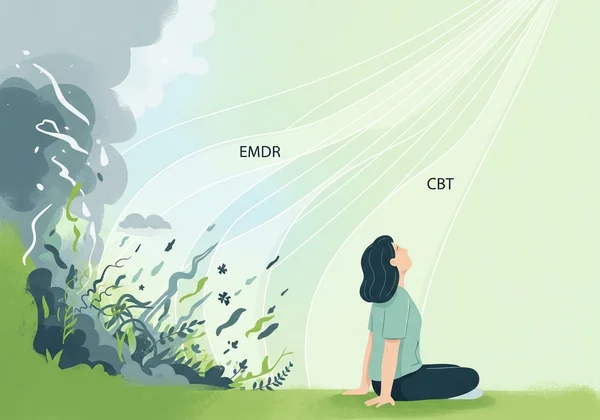
There is effective therapy for explosive anger that specifically addresses trauma. Modalities like Eye Movement Desensitization and Reprocessing (EMDR) help the brain process traumatic memories so they no longer trigger such intense reactions. Cognitive Behavioral Therapy (CBT) is excellent for identifying the thought patterns that lead to anger and developing new, healthier coping strategies. Seeking a therapist who practices trauma-informed care is essential, as they will create a safe space for healing without re-traumatization.
Your First Step to Clarity: The Importance of Self-Assessment
Before you can tackle a problem, you need to understand its shape and size. Gaining clarity on your specific anger patterns is a vital first step. An online anger self-assessment can provide a structured way to reflect on your experiences in a private, non-judgmental setting. It can help you organize your thoughts and feelings, providing valuable insights for a conversation with a healthcare professional. We encourage you to take our test to begin this process of self-discovery.
Moving Forward: Understanding, Healing, and Hope After Trauma
Your explosive anger is not who you are; it is a symptom of the pain you have endured. Recognizing the deep connection between trauma, PTSD, and IED is an act of self-compassion that opens the door to healing. You are not alone, and your past does not have to define your future.
By seeking to understand your triggers and patterns, you are taking back control. The journey requires courage, but it leads to a life where you are in charge of your emotions, not the other way around. To take that first brave step, consider exploring the free IED assessment on our website. It’s a confidential tool to help you clarify your situation and move toward a future of peace and hope.
Common Questions About Trauma, PTSD, and Explosive Anger
What causes intermittent explosive disorder?
Intermittent explosive disorder is believed to stem from a mix of genetic, biological, and environmental factors. Many individuals with IED grew up in families where explosive behavior and verbal or physical abuse were common. Biologically, differences in brain structure and the function of serotonin, a mood-regulating chemical, may also play a role.
What happens if IED is left untreated?
If left untreated, IED can have severe consequences. It can lead to job loss, school suspension, financial problems, and broken relationships. There is also an increased risk of self-harm, substance abuse, and other mental health conditions like depression and anxiety. An anger self-assessment can be the first step to preventing these outcomes.
How do I know if I have IED?
While only a mental health professional can provide a diagnosis, you may recognize the signs. Do you have recurrent, intense outbursts of anger that feel uncontrollable and are disproportionate to the situation? Do you feel deep regret afterward? If these questions resonate with you, it's worth exploring. Our confidential assessment can help you organize your experiences.
Does IED get worse with age?
IED often begins in the late childhood or teenage years. Without treatment, symptoms can persist and may worsen during high-stress periods. However, with effective treatment and the development of coping skills, many people find that the frequency and intensity of their outbursts decrease over time.
What does IED feel like?
Many describe the lead-up to an IED episode as a building of tension, irritability, and rage. During the outburst, there's a sense of losing control—as if you are watching yourself from the outside. Afterward, as the adrenaline fades, it's common to feel exhausted, embarrassed, and overwhelmed with guilt for the things said or done.