Track Anger Outbursts Before IED Screening
Why a calm record can help before any IED test
When explosive anger keeps repeating, memory gets unreliable fast. The parts that feel biggest in the moment are not always the details that explain the pattern later.
A short written record can help turn a frightening or confusing experience into something more concrete. It can also make a later IED screening tool more useful, because the answers are based on real episodes instead of rough guesses.
Tracking is not the same as diagnosing. It is a private way to notice what keeps happening, how severe it feels, and what kind of support may be needed next. Disclaimer: The information and assessments provided are for educational purposes only and should not replace professional medical advice, diagnosis, or treatment.
What an anger outburst log can and cannot do

A good log is simple. It should help a person see repeated patterns without turning every difficult moment into a label.
What patterns a log can reveal
An outburst log can show how often the episodes happen, what usually comes before them, how intense they become, and what happens afterward. Those details matter because intermittent explosive disorder involves more than feeling angry.
NCBI's StatPearls review defines intermittent explosive disorder as recurrent, impulsive, aggressive outbursts that are grossly out of proportion to the trigger or stressor. The same review explains that DSM-5 criteria can show up in two main ways. One is aggression occurring on average twice weekly for 3 months. The other is 3 severe outbursts in 12 months that cause property damage or physical injury. A log cannot confirm those criteria, but it can make the pattern clearer when someone uses a private self-assessment or speaks with a clinician.
The same NCBI review reports a lifetime prevalence of about 2.7 percent. That is one reason repeated explosive anger deserves careful attention instead of dismissal.
What a log cannot diagnose on its own
A log cannot decide whether a person has intermittent explosive disorder. It also cannot rule out other mental health, trauma-related, medical, or substance-related reasons for aggressive outbursts.
What it can do is reduce vagueness. Instead of saying "this happens all the time," a person can bring specific examples, timeframes, and consequences into a screening or clinical conversation.
The 5 things to write down after an outburst
The goal is not to write a long diary entry. The goal is to capture a few details while they are still clear.
Trigger, intensity, and what happened
Start with the situation. What happened right before the outburst? Was there criticism, frustration, noise, conflict, or a sudden feeling of being cornered?
Next, rate the intensity in simple language or on a 1 to 10 scale. Then write down what actually happened. Include shouting, threats, throwing objects, breaking property, hitting, or other actions that made the episode feel out of control.
That gives three useful data points right away:
- The likely trigger.
- How strong the anger felt.
- What the outburst looked like in real behavior.
Damage, consequences, and recovery time
Now capture what the episode cost. Write down whether anyone was hurt, whether property was damaged, whether there were work or relationship consequences, and how long it took to feel physically calmer.
This matters because the difference between frequent lower-level aggression and fewer severe destructive episodes can change how a professional interprets the pattern. A screening result summary becomes more useful when it is paired with concrete details instead of only a memory that the episode felt bad.
These are the next two items to record:
- Damage or immediate consequences.
- Recovery time, including regret, exhaustion, or emotional crash afterward.
Warning signs before the next episode
After a few entries, read them side by side. Many people start noticing early signs such as muscle tension, racing thoughts, pacing, clenched hands, or a feeling that the situation is suddenly unbearable.
That part is not one of the five core notes after a single episode. It comes from reviewing several episodes together. Still, it is one of the most useful parts of tracking because it helps someone notice the pattern earlier next time.
How to use the log before a screening or appointment

The log works best when it stays factual. A concrete note is more useful than a vague one. "Threw a phone after an argument and broke the screen" is clearer than "went crazy again." Concrete language gives a clearer picture and avoids extra shame.
Bring patterns, not a self-diagnosis
Before taking a screening or going to an appointment, look for repetition. Are the outbursts happening in similar settings? Is the intensity rising? Is there damage, fear, or legal risk showing up more often?
Bring those patterns into the conversation, not a conclusion. A screening tool can highlight risk patterns, but it is still a first step. The point is to make the next conversation more accurate, not to prove a diagnosis in advance.
When the pattern means you should not wait
Do not wait for a perfect log if there is immediate danger. Seek urgent help if an outburst includes fear of harming yourself, harming someone else, serious property damage, or an unsafe situation at home, work, or while driving.
SAMHSA's National Helpline is free, confidential, and available 24/7, 365 days a year for treatment referral and information. In the United States, immediate danger should be treated as an emergency, and local emergency services or 988 may be appropriate.
Persistent explosive anger also deserves offline support even when there is no emergency. If the episodes keep affecting relationships, work, safety, or daily functioning, talk to a qualified mental health professional instead of trying to manage it alone.
A simple weekly routine that keeps the log usable
A tracking habit only helps if it is realistic. The best routine is short enough to keep going during stressful weeks.
Keep entries short and factual
Use the same template every time. Date, trigger, intensity, actions, consequences, recovery time. One short entry is better than waiting for the perfect summary and writing nothing.
Neutral language helps too. The log should describe what happened, not punish the person writing it.
Review for patterns once a week
Once a week, read the entries together for five minutes. Look for repeated triggers, repeated times of day, repeated people or places, and repeated consequences.
That review is often the step that turns isolated shame into useful pattern recognition. It can also help a person decide whether it is time to use a screening tool, prepare for a first appointment, or ask someone trusted for support.
What to do next if the pattern keeps repeating
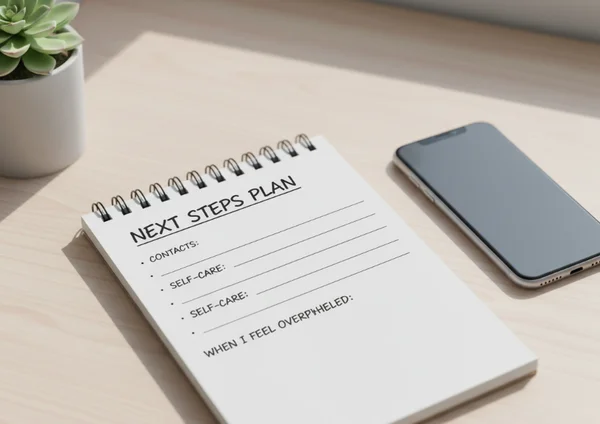
If the pattern keeps repeating, use the log to support the next step rather than to carry the problem alone. A calm record can make a screening result clearer, a clinical conversation more specific, and a safety plan more realistic.
What matters most is not whether the log is perfect. What matters is noticing repeated explosive anger early enough to seek support before the harm gets worse. If the pattern is persistent, intense, or unsafe, reach out to a qualified professional offline.
FAQ about anger outburst tracking
Does tracking mean I have IED?
No. Tracking only records patterns. It does not diagnose intermittent explosive disorder or rule out other causes.
How long should I keep an anger log?
A few weeks of consistent notes can already be useful. The goal is to capture repeated patterns clearly enough to support screening or a professional discussion.
When should I seek immediate help?
Seek immediate help when there is risk of harm to yourself or someone else, serious property destruction, or a situation that feels unsafe and hard to control. If there is immediate danger, contact local emergency services right away.