Preventing IED Outbursts: Early Warning Signs & Strategies
The silent countdown to an explosive outburst often begins long before the actual explosion. For those living with intermittent explosive disorder (IED), the feeling of "losing it" can be terrifying and confusing. One moment you are fine, and the next, you are overwhelmed by a rage that feels impossible to stop. Afterward, you might feel deep regret, shame, or fear about what happened.
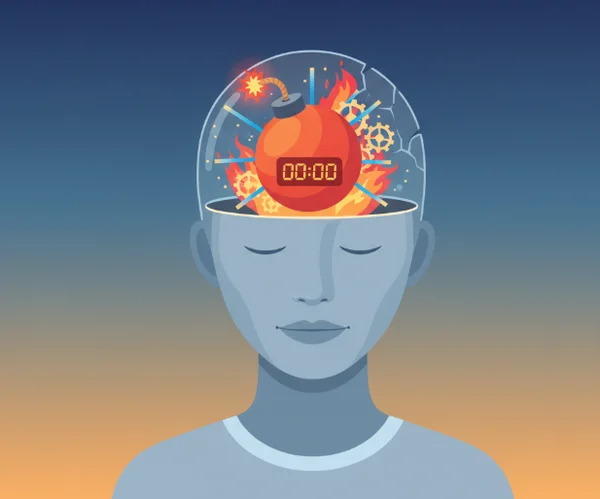
Do you ever feel like your anger is a ticking time bomb? If so, you are not alone. Recognizing the early warning signs of an IED episode is the first step toward regaining control. This guide will help you identify the subtle cues that your anger is escalating. We will also provide practical, evidence-based strategies to intervene before you reach the point of no return. Understanding your patterns is essential, and you can start your test today to get a clearer picture of your symptoms.
Identifying Early Warning Signs of IED Escalation
Intermittent explosive disorder is more than just a "bad temper." It is a clinical condition where the reaction is much stronger than the situation warrants. To prevent an outburst, you must become an expert on your own body and mind. Most people with IED experience a "pre-outburst" phase. If you can catch the anger here, you have a much higher chance of stopping the explosion.
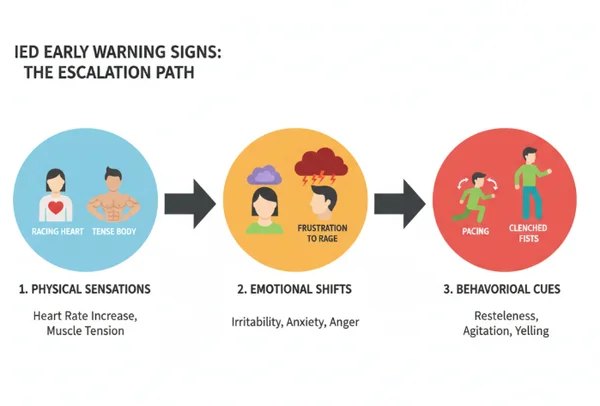
Physical Sensations: The Body's Red Flags
Your body often knows you are angry before your mind does. In the minutes leading up to an episode of intermittent explosive disorder, your nervous system enters "fight or flight" mode. You might feel a sudden surge of energy or a tightness in your chest. Many users report a tingling sensation in their hands or a "hot" feeling in their face and neck.
Other common physical red flags include:
- A racing or pounding heartbeat.
- Clenching your jaw or grinding your teeth.
- Shaking or tremors in your limbs.
- A "knot" or pressure in your stomach.
When you notice these signs, your body is telling you that the pressure is rising. Paying attention to these physical cues is a vital part of anger self-assessment and prevention.
Emotional Shifts: From Irritation to Rage
The emotional path to an IED outburst usually follows a specific pattern. It often starts with a low level of frustration or "annoyance." However, for someone with IED, this annoyance can turn into intense rage in seconds. You might feel a sudden sense of "unfairness" or feel like you are being attacked, even if the other person is being calm.
During this shift, your thoughts may become "all-or-nothing." You might think, "They always do this to me," or "I can't stand this for one more second." This emotional escalation is a hallmark of intermittent explosive disorder symptoms. When you recognize that your emotions are becoming disproportionate to the situation, it's a key moment to pause.
Behavioral Cues: Actions That Signal Trouble Ahead
Before the actual verbal or physical explosion, your behavior usually changes. These are outward signs that others might notice, but you can learn to spot them in yourself too. You might start pacing around the room or speaking in a louder, sharper tone. Some people begin to use sarcasm or "snappy" one-word answers.
Other behavioral cues include:
- Increasing the volume of your voice.
- Winging your arms or pointing aggressively.
- Staring intensely at the "target" of your anger.
- Suddenly withdrawing or becoming "stony" and silent before the storm.
If you recognize these behaviors, it is time to use a de-escalation technique. To see if your behaviors match the clinical criteria, try our tool for a confidential look at your patterns.
Proactive Intervention Strategies Before Explosion
When you feel anger building, your immediate goal is to interrupt the cycle before it escalates and help your nervous system reset. These techniques work best when practiced during times of calm. By making them part of your routine, they become "muscle memory" that you can rely on when the anger hits.
The 5-4-3-2-1 Grounding Technique
Grounding is a powerful way to pull your brain out of a rage spiral and back into the present moment. When you feel an outburst coming on, stop what you are doing and focus on your environment. The 5-4-3-2-1 technique uses your five senses to calm your nervous system.
- Look for 5 things you can see (a chair, a tree, a pen).
- Feel 4 things you can touch (your shirt, the table, your own hands).
- Listen for 3 things you can hear (the wind, a car, your breathing).
- Smell 2 things (coffee, the air, your soap).
- Taste 1 thing (even just the inside of your mouth).
This technique forces your brain to switch from the "emotional" center to the "logical" center. It is a highly effective way to manage explosive anger in the moment.
Cognitive Reframing: Changing Your Thought Patterns
How we talk to ourselves determines how we feel. In the heat of the moment, IED often causes "hostile attribution bias." This is a fancy way of saying you assume people are trying to hurt you on purpose. For example, if someone cuts you off in traffic, your brain might say, "He did that to disrespect me!"
Cognitive reframing involves challenging that thought. You might tell yourself, "Maybe he's having a bad day," or "It’s just a car, it doesn't define my worth." By changing the story you tell yourself, you can lower the intensity of the anger. Learning about IED causes can also help you realize that your reactions are often rooted in biology or past experiences rather than the current situation.
Physical Disruption: Breaking the Anger Cycle
Sometimes, you need to physically change your environment to stop an outburst. If you feel the rage building, the best thing you can do is "remove the fuel." This might mean literally walking out of the room. A short walk, splashing cold water on your face, or doing ten jumping jacks can "reset" your body.
Physical disruption works because it uses up the adrenaline that your body has produced. It gives you the 5 or 10 minutes needed for the "chemical" part of the anger to fade. Many people find that after 15 minutes of physical separation, the urge to explode has passed.

Building Your Personal Prevention Plan
Prevention is not just about what you do in the moment. It is about how you manage your life every day to lower the "baseline" of your anger. A person who is tired, hungry, and stressed is much more likely to have an IED episode than someone who is well-regulated.
Recognizing Your Unique Triggers
Everyone with intermittent explosive disorder has specific triggers. For some, it is being told "no." For others, it is feeling ignored or dealing with slow technology. To build a plan, you must know what pushes your buttons. Keep a simple "anger log" for a week. Note when you felt angry, what happened right before, and how you felt afterward.
Common triggers include:
- Physical pain or exhaustion.
- Financial stress.
- Feeling disrespected by a partner or boss.
- Traffic and crowded spaces.
Understanding these triggers allows you to prepare for them or avoid them when your energy is low. You can see your results on our site to learn more about common behavioral patterns.
Creating Your "Calm-Down Toolkit"
A "Calm-Down Toolkit" is a list of resources you can turn to immediately. This can be a physical box or a list on your phone. It should include things that help you relax and ground yourself. Your toolkit might include:
- A playlist of calming music or a favorite podcast.
- The phone number of a friend who understands your struggle.
- A "mantra" or short phrase you repeat (e.g., "This will pass," or "Stay calm").
- A breathing app or a link to a guided meditation.
Having these tools ready means you don't have to think about what to do when your brain is clouded by rage. You simply follow the plan you created when you were calm.
When Prevention Isn't Enough: Knowing When to Seek Help
While self-help strategies are incredibly useful, intermittent explosive disorder is a medical condition that often requires professional intervention. If your outbursts are causing problems at work, hurting your relationships, or leading to legal trouble, it's time to seek professional help.
Therapies like Cognitive Behavioral Therapy (CBT) and certain medications can make a massive difference. You don't have to carry this burden alone. Taking an online assessment is a great way to gather information that you can then share with a doctor or therapist. It serves as a bridge between "suffering in silence" and "getting better."
Navigating Your Path Toward Stability
As you work through these strategies, remember that progress isn't always linear. Each time you successfully recognize your warning signs and intervene, you're building stronger skills for managing your anger. By learning to identify your physical red flags, emotional shifts, and behavioral cues, you gain the "lead time" necessary to intervene. Using techniques like grounding, reframing, and physical disruption can help you interrupt the cycle before it turns into a disaster.
Remember, having intermittent explosive disorder does not make you a "bad person." It means you are dealing with a difficult emotional regulation challenge. Understanding your unique patterns is the most important step you can take today. We invite you to start your assessment now to gain the insights you need to move forward with hope and a clear plan for the future.
The Takeaway
Can I really prevent IED outbursts, or are they inevitable?
Outbursts are not inevitable. While the urge to be angry may feel automatic, the action of exploding can be managed. By recognizing early warning signs and using de-escalation tools, many people successfully reduce the frequency and intensity of their episodes. Using a confidential test can help you see where you are on the path to recovery.
How long does it take to learn effective prevention strategies?
Most people see an improvement within a few weeks of consistent practice. However, since IED involves deep-seated brain patterns, it can take months of therapy or practice to feel fully in control. The key is consistency—practicing your "toolkit" even when you are not angry.
What's the difference between normal anger management and IED-specific prevention?
Normal anger management often focuses on general stress. IED-specific prevention focuses on the disproportional nature of the rage. It addresses the "explosive" speed of the anger and often requires more intense grounding techniques and sometimes medical support. You can learn more about these differences on our resource page.
Should I use these techniques even when I'm not feeling angry?
Yes! Grounding and breathing exercises are like "exercise" for your nervous system. If you practice them while calm, your brain will find it much easier to use them when you are actually in a crisis.
How do I know if my prevention strategies are working?
You will know they are working if your "near misses" increase. A "near miss" is when you feel the rage building but manage to walk away or calm down instead of exploding. Over time, these successes will become more frequent than the outbursts themselves. To track your progress, consider taking a periodic assessment.