Impulse Disorder: Symptoms, Types, Causes, and Support Options
An impulse disorder is a pattern in which urges feel hard to pause, even when a person knows the action may create harm, regret, conflict, or risk. People often search this term when they are trying to understand repeated outbursts, reckless choices, stealing urges, fire-setting urges, compulsive-feeling behaviors, or anger reactions that seem much bigger than the situation. This guide explains what impulse disorder can mean, how impulse control disorder symptoms may appear, which examples are commonly discussed, and when extra support may help. If your main concern is explosive anger, a private anger-pattern self-check can be a gentle way to organize observations before deciding what kind of help to seek.

What an Impulse Disorder Means
"Impulse disorder" is a common search phrase rather than one single everyday label with only one meaning. In clinical language, many related conditions are described under impulse-control, disruptive, or conduct-related categories. The shared thread is difficulty resisting an urge, drive, or reaction, especially when the behavior is rapid, repeated, and followed by negative consequences.
That does not mean every impulsive act points to a mental health condition. Everyone acts quickly sometimes. A more concerning pattern is usually persistent, hard to interrupt, out of proportion to the trigger, and connected to problems in relationships, school, work, safety, finances, or legal situations. Frequency, intensity, aftermath, and context matter.
It also helps to separate impulse problems from ordinary preference or personality. A person may be spontaneous, impatient, or sensation-seeking without having a disorder. The question is whether the impulse pattern repeatedly overrides values, responsibilities, or safety, and whether the person feels stuck in a cycle of urge, action, regret, and repair.
Impulse Control Disorder Symptoms in Adults and Teens
Impulse control disorder symptoms can look different depending on the behavior involved, but several patterns often appear across examples. A person may describe a sudden build-up of tension, a narrow focus on acting, relief or release during the behavior, and guilt, shame, confusion, or conflict afterward. For anger-related patterns, the behavior may involve yelling, threats, property damage, or aggressive reactions that feel faster than conscious choice.
In adults, impulse problems may show up as repeated arguments, risky spending, unsafe driving, substance-related escalation, aggressive reactions, or behaviors that damage trust. In teens, they may appear as rule-breaking, fights, destructive outbursts, school discipline issues, or risky online and offline choices. Childhood and teen behavior should be understood with developmental context, family stress, sleep, trauma exposure, learning needs, and support systems in mind.
Some warning signs deserve extra attention: the person often feels unable to stop once activated, others feel unsafe, the behavior is escalating, or consequences are becoming more serious. If explosive anger is the main concern, an explosive anger screening experience can help someone describe patterns more clearly, while still recognizing that online screening is informational and not a formal diagnosis.

Types and Examples of Impulse Control Disorders
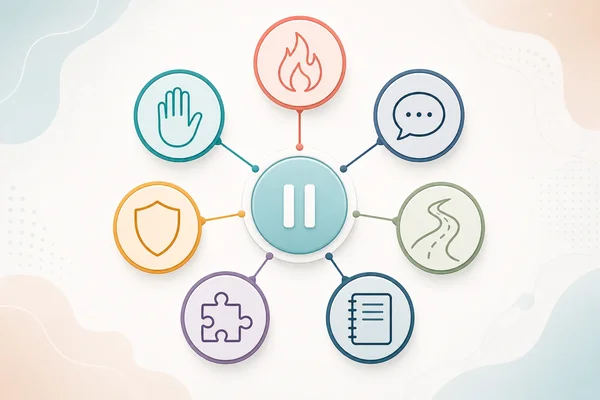
People often ask for an impulse control disorders list or "7 types of impulse control disorder." Lists vary because different sources organize the topic in different ways, but examples commonly discussed include intermittent explosive disorder, kleptomania, pyromania, conduct disorder, oppositional defiant disorder, other specified disruptive, impulse-control, and conduct disorder, and unspecified disruptive, impulse-control, and conduct disorder.
Intermittent explosive disorder is especially relevant when the central pattern is repeated anger outbursts that are disproportionate to the situation. The person may later feel embarrassed or confused by how quickly the reaction escalated. Kleptomania involves recurrent urges to steal items that are not needed for practical use or monetary value. Pyromania involves recurrent fire-setting urges and fascination with fire, distinct from fire-setting for revenge, gain, or concealment.
Conduct disorder and oppositional defiant disorder are often discussed in child and adolescent contexts. They involve persistent behavioral patterns, not a single bad decision. "Other specified" and "unspecified" terms are used when clinically significant symptoms do not neatly match a more specific category or when there is not enough information to be more precise.
An example of an impulse disorder, then, is not simply "someone did something impulsive." It is a repeated pattern where the urge-driven behavior is difficult to resist, creates harm or impairment, and fits a broader clinical picture. That distinction keeps the conversation more accurate and less blaming.
What Causes Impulse Control Disorder Patterns?
There is rarely one simple cause. Impulse control problems can reflect a mix of biology, temperament, learning history, stress, trauma exposure, family conflict, sleep disruption, substance use, co-occurring mental health conditions, and environmental pressure. Some people are more reactive by temperament. Others learned early that intense reactions were the only available way to get attention, escape threat, or express distress.
Brain systems involved in reward, threat detection, emotion regulation, and decision-making may also play a role. When a person is highly activated, the body can move into action mode before reflective thinking catches up. That does not remove responsibility for behavior, but it helps explain why skills such as pausing, leaving the room, naming the trigger, and reducing stimulation can matter.
Co-occurring issues can complicate the picture. ADHD can involve impulsivity, but ADHD itself is usually discussed as a neurodevelopmental condition rather than an impulse control disorder. Bipolar disorder, borderline personality disorder, substance use disorders, anxiety, depression, trauma-related conditions, and learning difficulties may also include impulsive behaviors. Careful professional evaluation can help sort out what is driving the pattern and what support is most appropriate.
Impulse Disorder DSM-5 and ICD-10 Wording: What to Know
Searches such as "impulse disorder DSM 5," "impulse control disorder DSM-5," and "impulse disorder ICD 10" usually come from people trying to understand official wording. The practical point is that formal systems do not always use the casual phrase "impulse disorder" in the same way a searcher does. They use more specific categories, criteria, and codes.
In DSM-5-style wording, many relevant conditions are grouped with disruptive, impulse-control, and conduct disorders. These categories focus on problems with emotional and behavioral self-control. ICD coding systems may use different names, groupings, and code structures, and these can change over time. Because coding language is technical, it is best used as a professional reference rather than a self-label.
For readers, the most useful takeaway is simple: official categories are more specific than search phrases. If you are trying to understand your own experiences, write down the behaviors, triggers, frequency, impact, and what happens afterward. Those details are more useful than trying to force yourself into a code.
Impulse Control Disorder Treatment and Support Options
Impulse control disorder treatment depends on the specific pattern, age, risk level, and co-occurring concerns. Support may include psychotherapy, skills training, family work, school or workplace planning, safety planning, medication review, or treatment for related conditions. Cognitive behavioral approaches often focus on noticing triggers, challenging interpretation patterns, practicing delay skills, and creating alternatives before the urge peaks.
For anger-related patterns, support may include recognizing early body cues, reducing access to weapons or breakable objects during high-risk moments, practicing exit plans, repairing relationships safely, and learning ways to communicate before escalation. For stealing, fire-setting, or conduct-related patterns, support may need to address risk management, supervision, accountability, and underlying distress.
Self-help strategies can support professional care, but they are not a substitute when behavior is dangerous, escalating, or causing serious impairment. Useful first steps include tracking episodes, identifying high-risk times, improving sleep, reducing alcohol or drug triggers, practicing a 10-minute delay, and telling a trusted person what support looks like before a crisis. If there is immediate danger, urgent local help is more appropriate than online reading.

How to Reflect on Explosive Anger Patterns Safely
Impulse disorder language can feel heavy, especially if anger outbursts have affected people you care about. A safer first step is to describe the pattern without turning it into a fixed identity. What usually happens before the urge? What does your body feel like? How long does the episode last? What damage, fear, or regret follows? What has helped even a little?
Because IEDTest focuses on explosive anger and IED-related screening, it is most relevant when the impulse pattern involves sudden anger, aggression, or outbursts that feel out of proportion. You can use a self-reflection tool for anger outbursts to organize those observations privately, then decide whether to bring them to a mental health professional, doctor, counselor, or trusted support person.
The goal is not to label yourself harshly. The goal is to notice patterns early enough to reduce harm, build pause skills, and ask for support before the next episode becomes harder to repair.
FAQ
What is the impulse disorder?
"Impulse disorder" is a broad search phrase people use for conditions involving repeated difficulty resisting urges, reactions, or behaviors. More specific clinical terms may include impulse-control, disruptive, or conduct-related disorders.
What are five examples of impulse control disorders?
Examples often discussed include intermittent explosive disorder, kleptomania, pyromania, conduct disorder, and oppositional defiant disorder. Some lists also include other specified or unspecified disruptive, impulse-control, and conduct disorders.
What are the four types of impulsivity?
Researchers may describe impulsivity in different ways, but four useful everyday groupings are acting without thinking, difficulty waiting, emotion-driven urgency, and choosing short-term reward despite long-term cost.
Is ADHD an impulse control disorder?
ADHD is generally discussed as a neurodevelopmental condition, not simply an impulse control disorder. However, impulsivity can be a major ADHD feature, so careful assessment may be useful when attention, restlessness, and impulse problems overlap.
What causes impulse control disorder?
Causes can include temperament, brain regulation systems, stress, trauma exposure, family and social learning, sleep problems, substance use, and co-occurring mental health conditions. Most cases involve more than one factor.
What is impulse disorder unspecified?
"Unspecified" wording is used when symptoms are clinically significant but do not clearly fit a more specific category, or when there is not enough information to choose a narrower label. It is a technical term best interpreted with professional guidance.
When should someone seek professional support?
Consider support when impulses are escalating, harming relationships, creating safety concerns, affecting work or school, causing legal or financial problems, or leaving the person feeling unable to interrupt the pattern.