Bad Temper vs. Intermittent Explosive Disorder (IED): Understanding Your Anger Differences
Are you just "short-tempered," or is there something more to your anger? Many people struggle with this question, feeling trapped between frustration with their reactions and the shame that often follows. It’s easy to dismiss intense anger as just a part of your personality, but understanding the difference between a normal bad temper and a clinical condition like intermittent explosive disorder (IED) is the first step toward gaining control. How do I know if I have IED? We're here to help you explore these distinctions, understand your anger more deeply, and empower you to take the next step towards clarity.
The journey to understanding can feel isolating, but you are not alone in this. Recognizing that your anger might be more than just a fleeting mood is a sign of strength and self-awareness. Our platform provides a safe, confidential space to explore these feelings. Our goal is to empower you with knowledge and a tool to help you see your patterns more clearly. You can get initial insights with our free assessment.
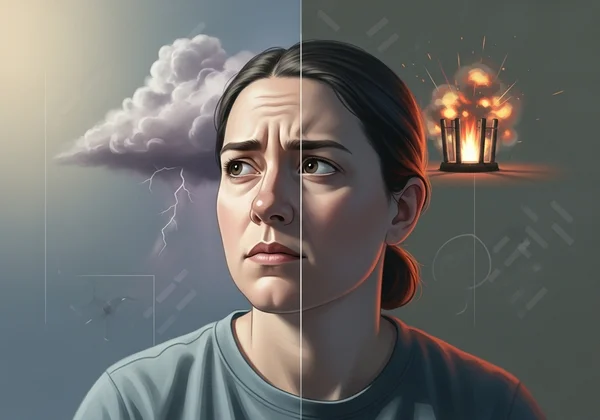
Recognizing the Signs of Intermittent Explosive Disorder (IED) and Explosive Anger Outbursts
Before we can compare a bad temper to Intermittent Explosive Disorder, it's essential to understand what defines an explosive outburst. These episodes are not just about feeling angry; they are about how that anger manifests. The signs often revolve around a loss of control that feels sudden and overwhelming, leaving you and those around you shaken. Reflecting on these signs can help you identify patterns you may have previously overlooked.
Many people who struggle with explosive anger feel a deep sense of confusion afterward, wondering why they reacted so strongly. This reflection is a critical part of the process. Examining the intensity, frequency, and consequences of your anger can provide valuable clues about what's really going on beneath the surface.
The Intensity and Proportionality of Your Anger
A key sign of IED is an outburst that is grossly out of proportion to the trigger. Someone with a bad temper might yell during a heated argument about finances. In contrast, an individual with patterns consistent with IED might fly into a rage, scream, or throw objects because someone accidentally cut them off in traffic. The reaction isn't just strong; it's a massive overreaction that doesn't fit the situation.
Think about your recent anger episodes. Did the scale of your response match the event that caused it? If you find yourself consistently reacting with a "level 10" intensity to a "level 2" problem, it’s a strong indicator that something more than a simple bad temper is at play. This disproportionate response is a hallmark of the impulsive aggression seen in IED.
How Frequent Are Your Intermittent Explosive Disorder (IED) Anger Episodes?
Everyone gets angry occasionally. A bad temper might surface a few times a month during periods of high stress. However, the diagnostic criteria for IED specify a more consistent pattern. This could involve verbal aggression or non-destructive physical outbursts occurring, on average, twice a week for at least three months.
Alternatively, it can manifest as three more severe, destructive episodes involving damage to property or physical assault within a 12-month period. If your explosive anger isn't a rare occurrence but a recurring theme in your life, it's worth paying closer attention. Tracking the frequency can help you and a professional see the full picture. Getting a clearer view of your patterns is possible with an anger self-assessment.
Identifying Triggers vs. Unprovoked Explosions
While outbursts in IED are often preceded by a trigger, the trigger can be incredibly minor or even misinterpreted. The feeling is often described as going from zero to one hundred in seconds, with little to no warning. It's an impulsive, reactive explosion rather than a slow-burning anger that builds over time.
A person with a bad temper might feel their anger growing throughout a frustrating day, culminating in a grumpy evening. For someone with IED, the explosion can feel like it comes out of nowhere, sparked by a trivial annoyance. This lack of a "build-up" period is a significant distinction and contributes to the feeling of being out of control.
The Impact of Anger on Your Relationships and Life
Perhaps the most telling sign is the aftermath. A bad temper can strain relationships, but explosive outbursts can destroy them. The consequences of IED-related anger are often severe and far-reaching. This can include job loss, legal trouble, divorce, or complete alienation from friends and family who become fearful of the next episode.
If your anger has led to significant negative consequences in your personal or professional life, it is a serious red flag. When your outbursts are causing tangible damage to your world, it's vital to recognize that this is more than just a "quirk"—it's a pattern that warrants attention. Taking a step to explore your anger patterns can provide the clarity you need.

Core Differences: Bad Temper vs. Intermittent Explosive Disorder (IED) Symptoms
Now that we've outlined the general signs of explosive anger, let's draw a clearer line between a "bad temper" and the clinical symptoms of intermittent explosive disorder. While both involve anger, IED is a recognized impulse-control disorder with specific diagnostic criteria. Understanding these official markers helps separate a character trait from a condition that can be managed with the right support.
A bad temper is often situational and, to some extent, manageable. IED, however, is characterized by a fundamental failure to control aggressive impulses. It's less about choosing to be angry and more about an inability to stop an aggressive reaction once it starts. This distinction is vital for developing self-compassion and seeking effective help.
Understanding Intermittent Explosive Disorder (IED) Through DSM-5 Criteria
To provide clarity, mental health professionals use the Diagnostic and Statistical Manual of Mental Disorders (DSM-5). This manual outlines specific criteria for IED. It requires recurrent aggressive outbursts that demonstrate a failure to control aggressive impulses. As mentioned, this includes either frequent verbal/non-destructive physical aggression or less frequent but more severe destructive/assaultive acts.
Crucially, the DSM-5 states that the aggression is not premeditated (it's impulsive) and is not committed to achieve some tangible objective (like money or power). It's a raw, reactive explosion. Furthermore, these outbursts cause marked distress to the individual or impair their work, social, or financial life. Understanding that there is a formal definition can help validate your experience; you can take the first step toward understanding your own patterns on our website.
What Does "Out of Proportion" Really Mean for IED?
Let's delve deeper into this concept. A person with a bad temper might snap at their partner after a long, stressful day at work. The anger is understandable, even if it's not ideal. For IED, the disproportionate reaction is the core feature. For example, screaming at a child for spilling a glass of milk or punching a wall because a video game is lagging.
This "out of proportion" nature means that an outside observer would be shocked by the level of rage displayed in response to such a minor event. It's this disconnect between the stimulus and the response that separates a moment of frustration from a symptom of an underlying impulse-control issue.
Post-Outburst Feelings: Guilt, Remorse, or Justification?
The emotional aftermath is a powerful differentiator. After an outburst, someone with a bad temper might feel justified in their anger, blaming the other person or the situation. They may think, "Well, they deserved it for what they did."
In contrast, individuals with IED often experience intense feelings of remorse, shame, or guilt after an episode. Once the rage subsides, they are horrified by their own behavior. This cycle of explosive anger followed by deep regret is a painful and isolating experience. If you recognize this pattern of lashing out and then being consumed by shame, it's a strong sign that your anger is causing you significant personal distress, a key component of IED.

When to Consider a Deeper Look: The Value of Self-Assessment
If you've read this far and find yourself nodding along, it might be time to move from questioning to seeking clarity. It's easy to get stuck in a loop of self-doubt and criticism. However, taking a proactive step to understand your anger is an act of self-care and courage. A self-assessment can be an invaluable, low-pressure first step on this journey.
It provides a structured way to reflect on your experiences without judgment. An objective tool can help you see patterns that are hard to recognize when you're in the thick of them. Our free and confidential explosive anger test is designed to provide just that—a mirror to your experiences.
Why Your Anger Might Be More Than Just Stress
Stress is a common trigger for irritability, but it doesn't fully explain the explosive, out-of-control nature of IED. While stress can lower your threshold for frustration, IED involves a neurological component related to impulse control and emotional regulation. Your brain may be wired to react more intensely to perceived threats or provocations.
Thinking of it as "just stress" can be a form of dismissal that prevents you from seeking the right kind of support. Acknowledging that there could be more going on is not a sign of weakness; it's a sign that you're ready to address the root cause, not just the symptoms.
Taking the First Step: Our Free Online IED Self-Assessment
Uncertainty can be paralyzing. Taking a small, concrete action is the best way to break through it. Our free online IED self-assessment is designed to help you do just that. It's a completely confidential, straightforward questionnaire that guides you through the key behaviors and feelings associated with IED.
There is no judgment, and there are no wrong answers. The goal is simply to provide you with a summary of your patterns based on your responses. This summary can serve as a valuable starting point for a conversation with a loved one or a mental health professional. It's not a diagnosis, but it is a powerful tool for insight. Start your assessment today to gain the clarity you deserve.

Your Journey from Confusion to Clarity About Anger
Taking the courageous step to understand your anger—whether it's a "bad temper" or consistent with Intermittent Explosive Disorder—is the first stride towards a more peaceful future. Remember, IED is a manageable condition, not a personal failing, and your feelings are entirely valid. You don't have to face this confusion alone.
You don't have to navigate this confusion alone. Understanding is the first step toward control and healing. By taking a moment for self-reflection, you are opening the door to a more peaceful and stable future for yourself and your relationships.
We encourage you to take the next step on your journey. Visit our site to use our free, confidential Anger & Impulsivity Self-Assessment. It’s a simple action that can provide profound insights and guide you toward the support you need.
FAQ Section
What are the 7 signs of intermittent explosive disorder?
While not an official list, common signs include: 1) Outbursts that are grossly out of proportion to the trigger. 2) Impulsive, non-premeditated aggression. 3) Frequent verbal aggression or non-destructive physical outbursts. 4) Less frequent but severe destructive acts. 5) Intense anger that feels uncontrollable. 6) Feeling a sense of relief or release during the outburst. 7) Experiencing significant guilt, shame, or distress after the episode.
How do I know if I have IED?
The only way to know for sure is through a formal diagnosis from a qualified mental health professional. However, you can start by looking for the patterns discussed in this article: disproportionate rage, frequent episodes, and significant negative impacts on your life. Taking a confidential online assessment tool can be a helpful first step in gathering insights to discuss with a doctor or therapist.
What does IED feel like?
Many people describe it as a sudden, overwhelming wave of rage that completely takes over. It can feel like a "blinding" anger where you lose control of your actions and words. During the episode, there might be a sense of release, but this is almost always followed by deep regret, embarrassment, and confusion about why you reacted so intensely.
Can intermittent explosive disorder be cured?
While "cure" might not be the right word, IED is highly manageable. With the right treatment, which often includes cognitive-behavioral therapy (CBT) and sometimes medication, individuals can learn to recognize their triggers, manage their anger, and control their impulsive reactions. Many people see a significant improvement in their quality of life with proper support.
Does IED get worse with age?
If left untreated, the consequences of IED can certainly worsen over time as relationships become more damaged and legal or financial problems accumulate. However, the severity of the symptoms themselves does not necessarily increase with age. For many, especially those who experience onset in their teenage years, the condition can improve with age as the brain matures. Seeking treatment is the most effective way to prevent the condition from worsening.